Picture this: it's 2 am in San Francisco. The submission clock is ticking down, and four of our team members are huddled around a laptop hitting submit on Cerebro with seconds to spare.
Spoiler: they made it, and took third place 😝.
How did they get there, you ask? Well here's the story of how a week-old platform, two days, and four people turned into one jam-packed hackathon weekend.
How it started
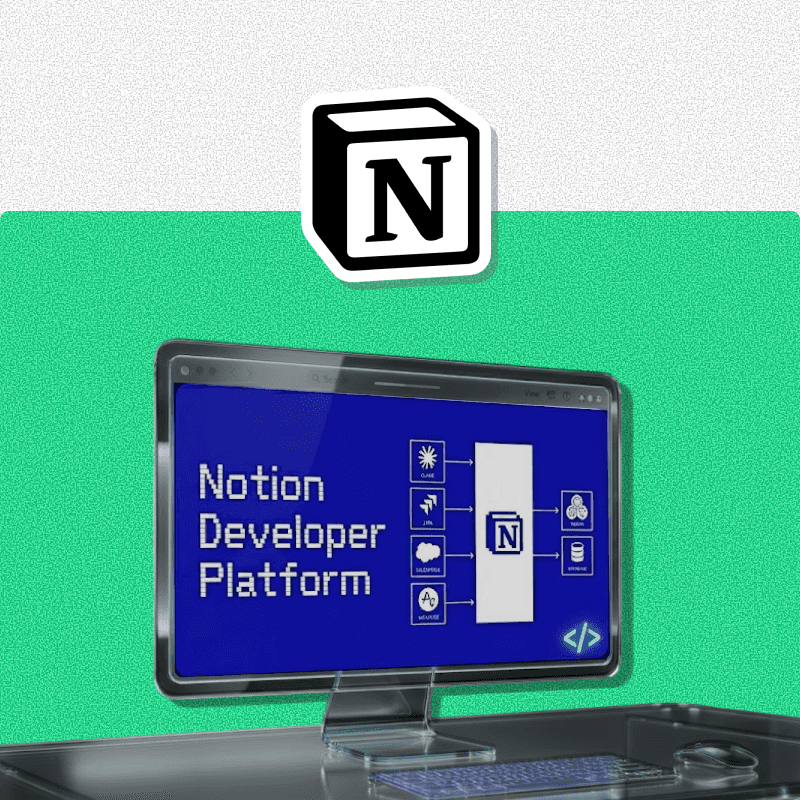
In May, Notion ran a two-day hackathon in San Francisco to celebrate its new Developer Platform, the set of tools that lets teams build directly on top of Notion. You can sync any data source in, hand an agent real capabilities, and trigger workflows from anywhere, all without managing a single server. Just a command line and an idea, basically. (We wrote a full breakdown of what the Developer Platform actually ships if you want a more technical tour.)
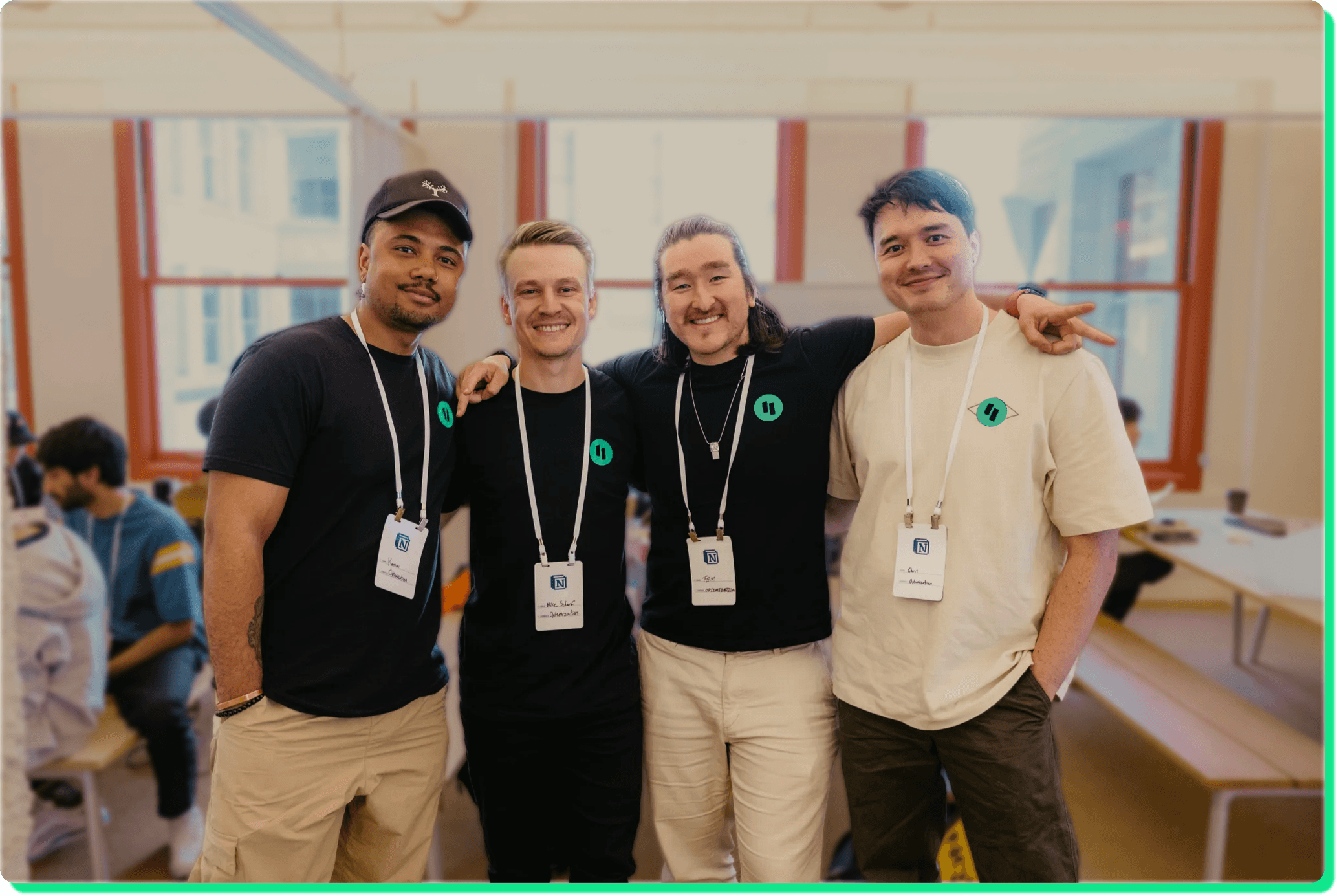
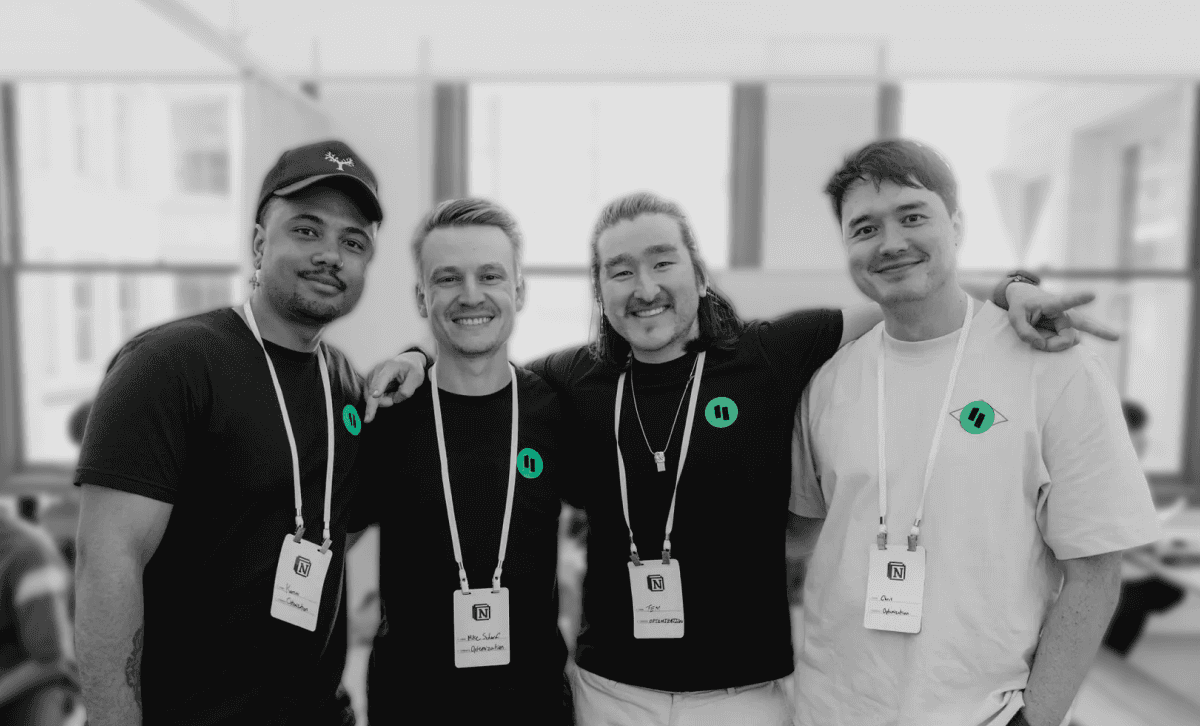
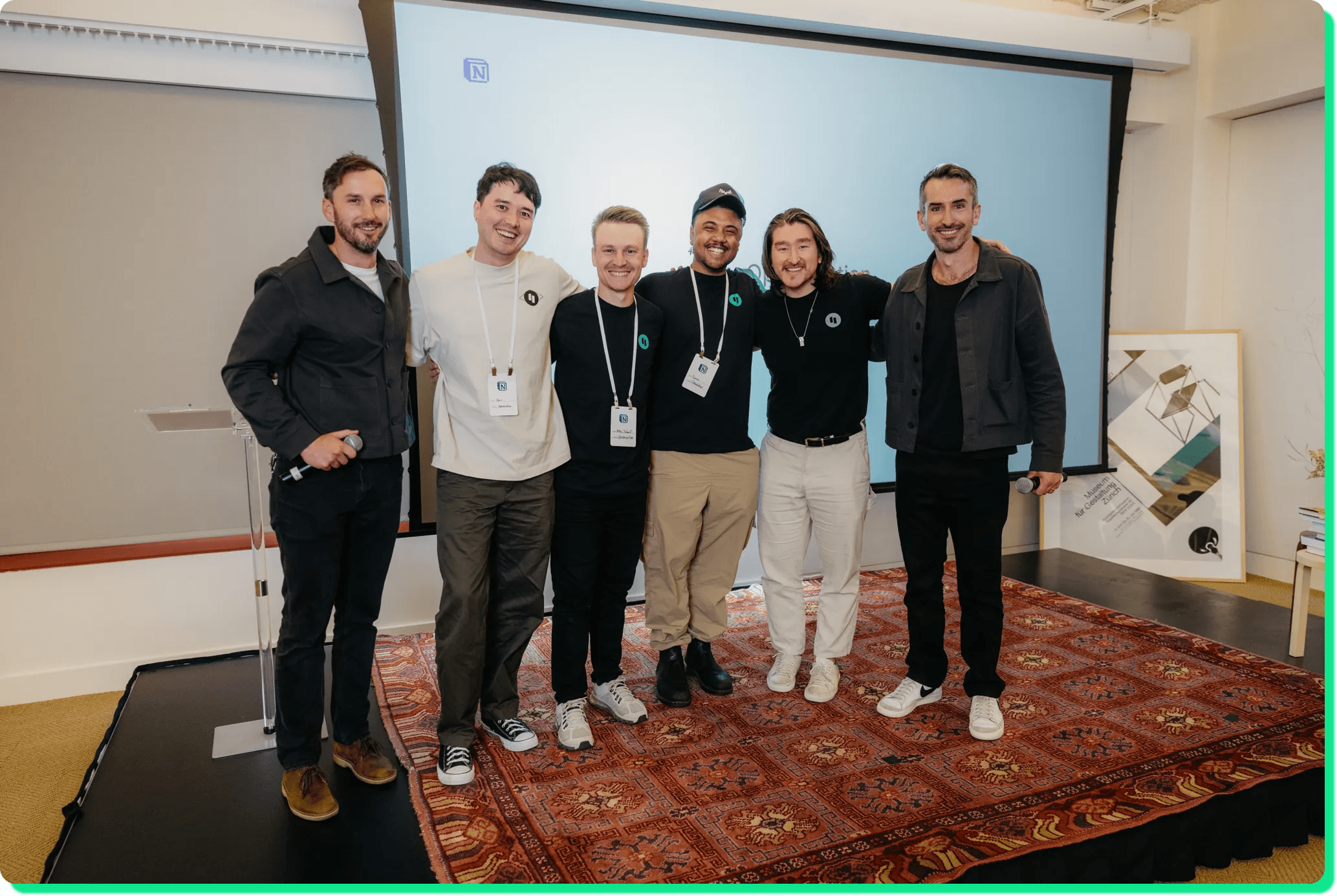
📸: From left to right: Kamau Muata (Developer), Mike Scharf (Lead Developer), Tem Nugmanov (Founder & CEO), and Chris Hoskins (Engineer). Photo by Boris Zharkov.
Tem, Optemization’s founder, was actually invited to mentor at the event, but he politely declined in favor of building something himself, along side his team. For Optemization, it came down to a simple instinct: we would rather build than watch. Our whole pitch to clients is that we stay on top of what Notion can do, so a hackathon on a platform barely a week old was a chance to prove it for real, not just say it in a sales deck.
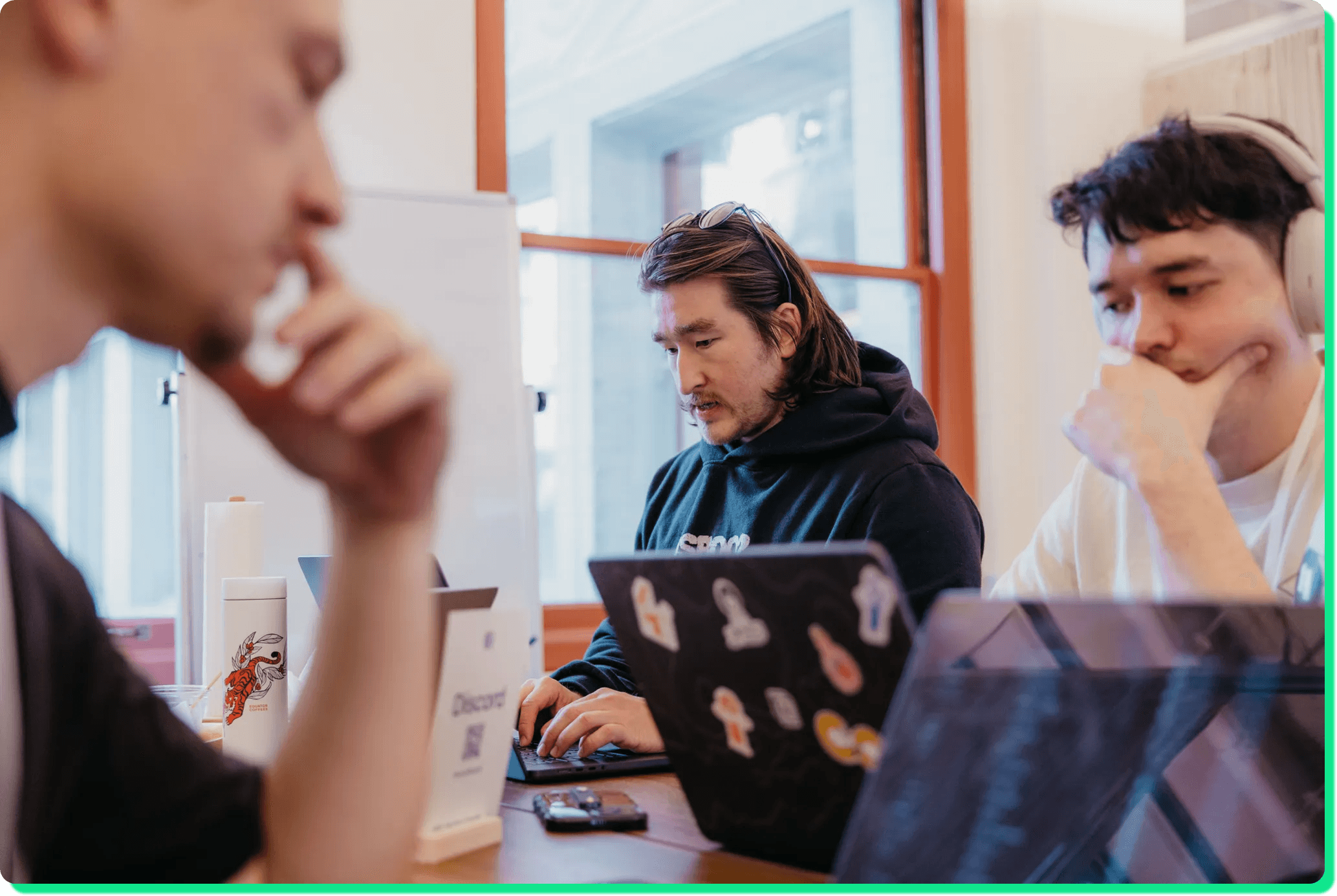
📸: Photo by Boris Zharkov.
What we built: an autonomous second brain
We came in swinging. Over two days, our team of four built Cerebro, an autonomous "second brain" for companies. The idea: a knowledge base that builds, heals, and manages itself. Any employee can log in and ask it what's going on, what decisions are open, what needs attention, and it answers from everything the company already produces day to day.
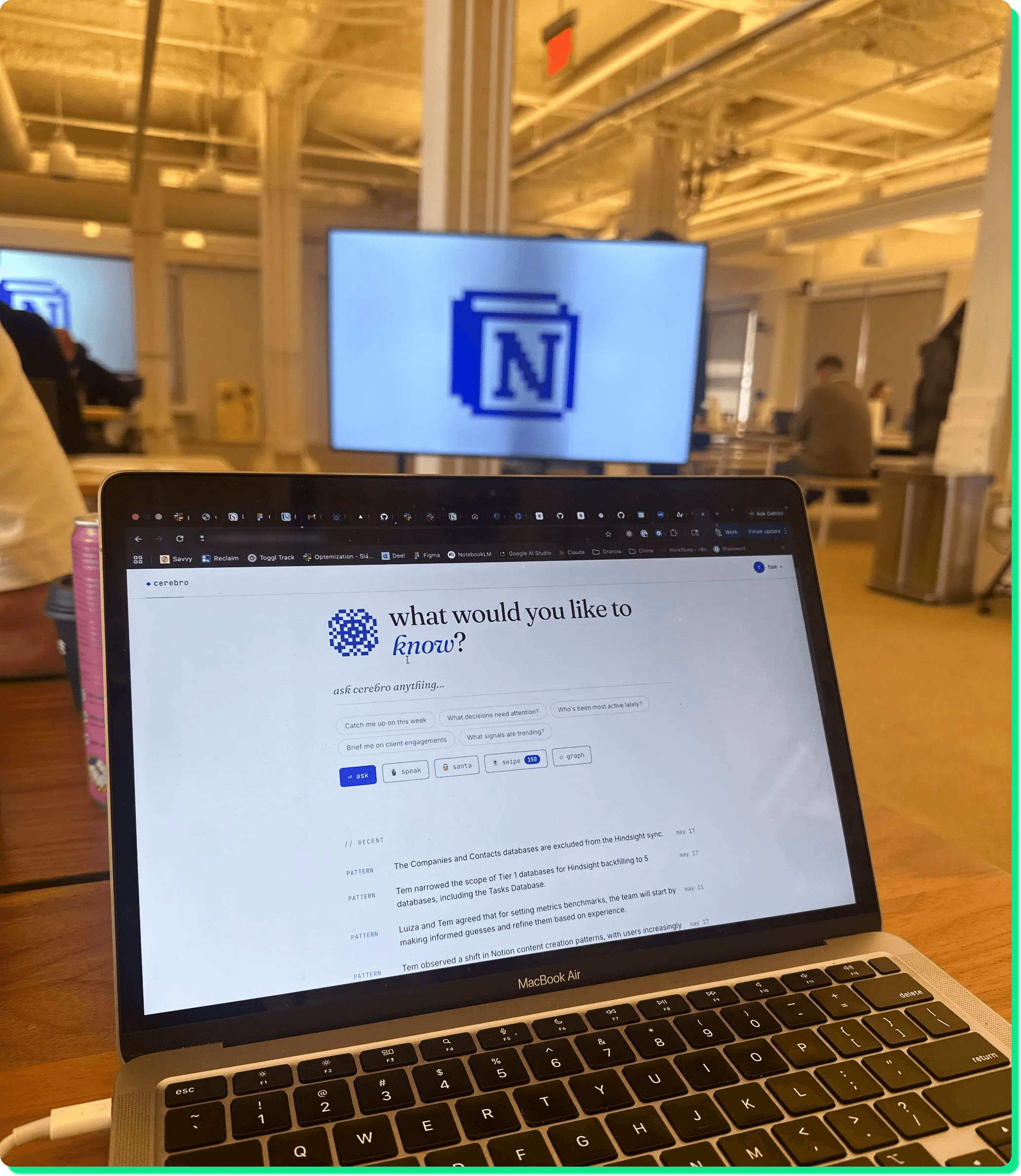
📸: Cerebro's interface. Ask it anything, it answers from what the company already knows.
Under the hood, it runs on a set of Notion Workers, the same Developer Platform primitives that launched barely a week before the event. If you've read our piece on Notion's Custom Agents, it lives in that same world of autonomous workers, pushed about as far as you can push it in 48 hours.
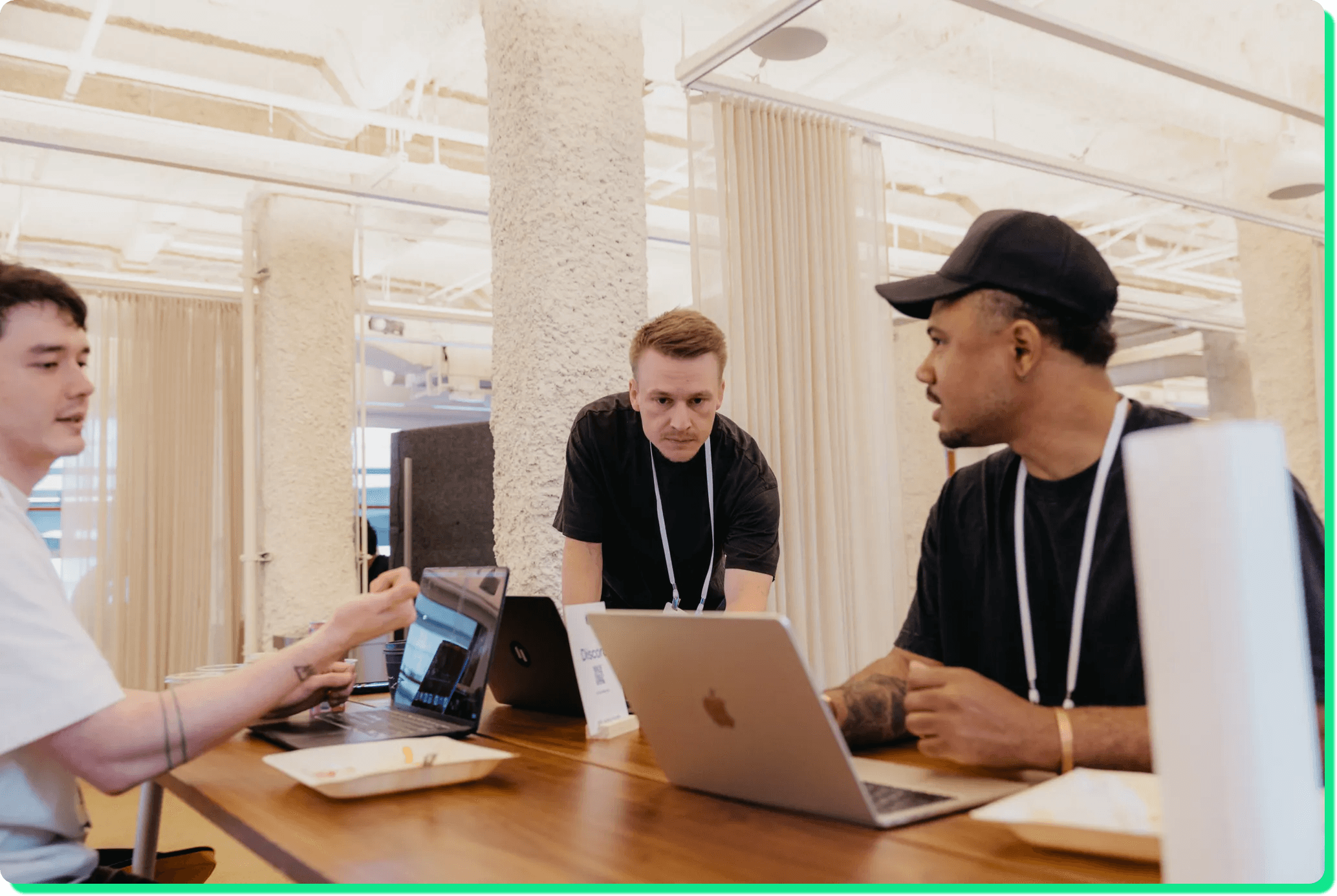
📸: Photo by Boris Zharkov.
We'll save the deep dive for another day, since Cerebro hasn't fully shipped to the public yet. But the short version is this: a working, genuinely ambitious product, built from nothing, on tooling that was a week old, by four people in a single weekend.
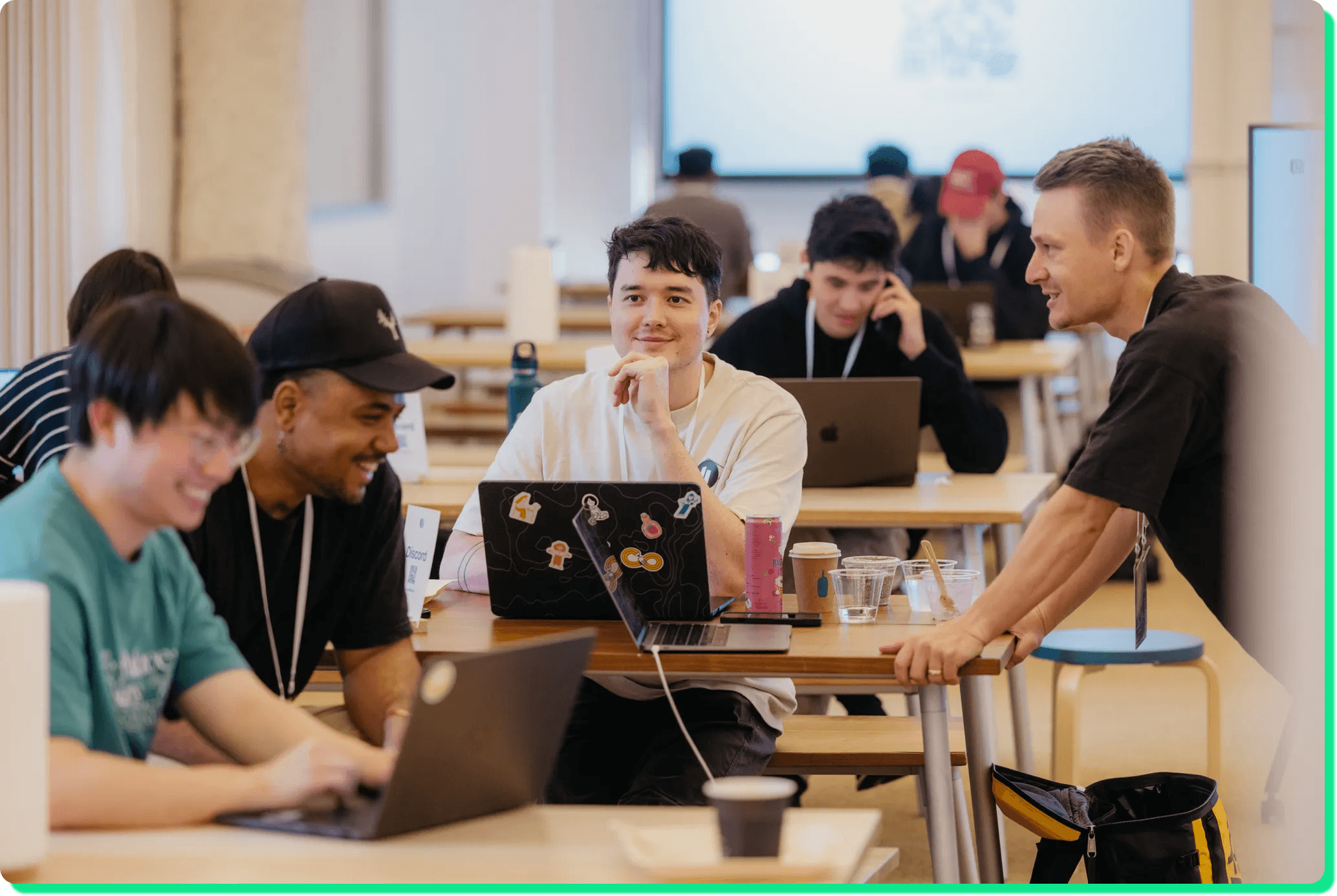
📸: Photo by Boris Zharkov.
48 hours, a whole lot of caffeine, and seconds to spare
A hackathon is two days of building at full tilt, and honestly, that's the appeal. You get an idea on Saturday morning and a working product by Sunday night, with not much sleep in between. Between the four of them, they clocked around fifteen hours of combined sleep.

📸: Exhibit A: roughly one hour of sleep, documented.
Here's a pic from day two that Tem sent in the team Slack that says it all: the kind of bleary, over-caffeinated focus you only get when a deadline is close and quitting isn't on the table.
And then, the most hackathon thing imaginable, they submitted with seconds to spare.
Finalists out of 40+ teams, then bronze
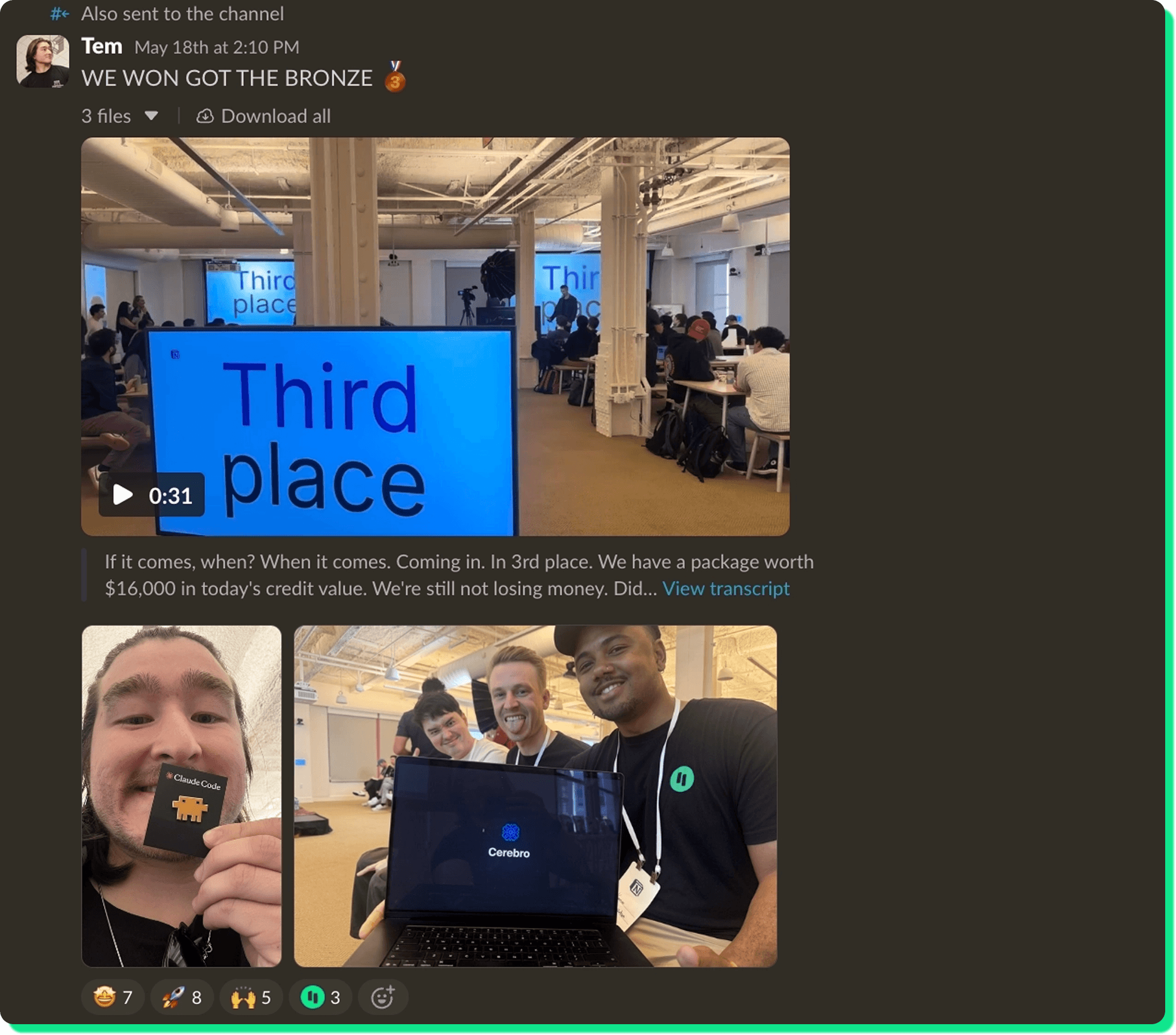
More than forty teams entered. Six made the finals. We were one of the six. And then we placed third.
📸: Third place, out of more than forty teams. Photo by Boris Zharkov.
There was a prize too, by the way, around $16K in credits and tooling, which was a great cherry on top. But the thing is, it is not about the prize but rather what the accomplishment of the team over that weekend proved: a platform launches one week, and the next, our team has shipped something competitive on it against forty others. That's what staying current with Notion looks like when it's your actual job.
The part you can't build in 48 hours
I remember logging into Slack when the results came in. The whole company was already there, people cheering from every timezone, half of them nowhere near San Francisco. Someone had even started a side bet on how those fifteen hours of sleep got split between the four of them. Nobody guessed right.
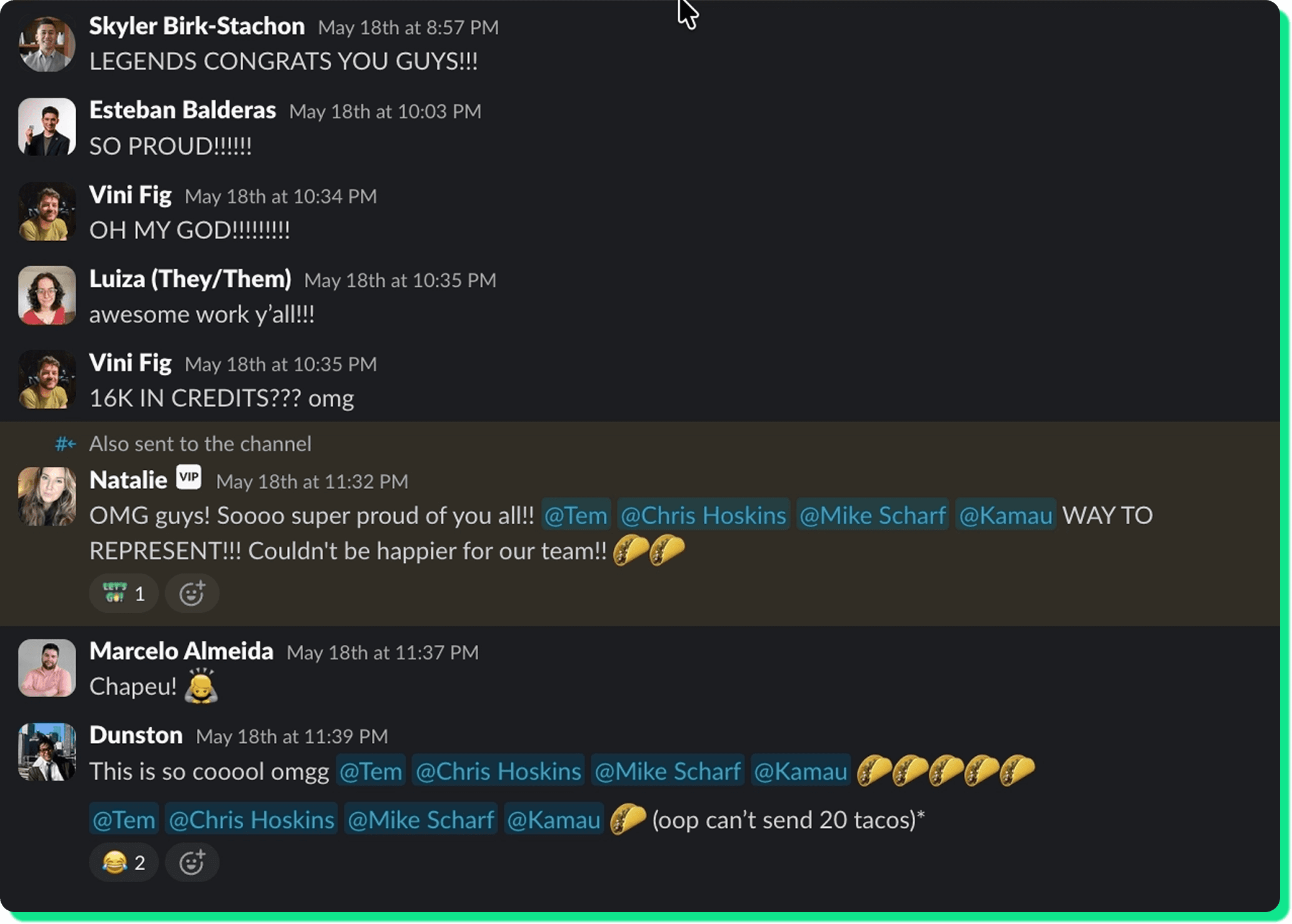
The way everyone showed up for it, and fast, was a sight to behold. Within minutes the thread was a wall of all-caps and taco emojis (we've got this Slack thing where we send each other 'tacos' to recognize good work) from people who had nothing to do with the build. Just genuinely thrilled for four teammates a continent away. It was everyone's win, after all.
What this means if you work with us
We entered this hackathon because building is part of our DNA. Nobody had to be convinced to give up a weekend to wrestle with a brand-new platform. That's just who we are when something new and interesting lands.
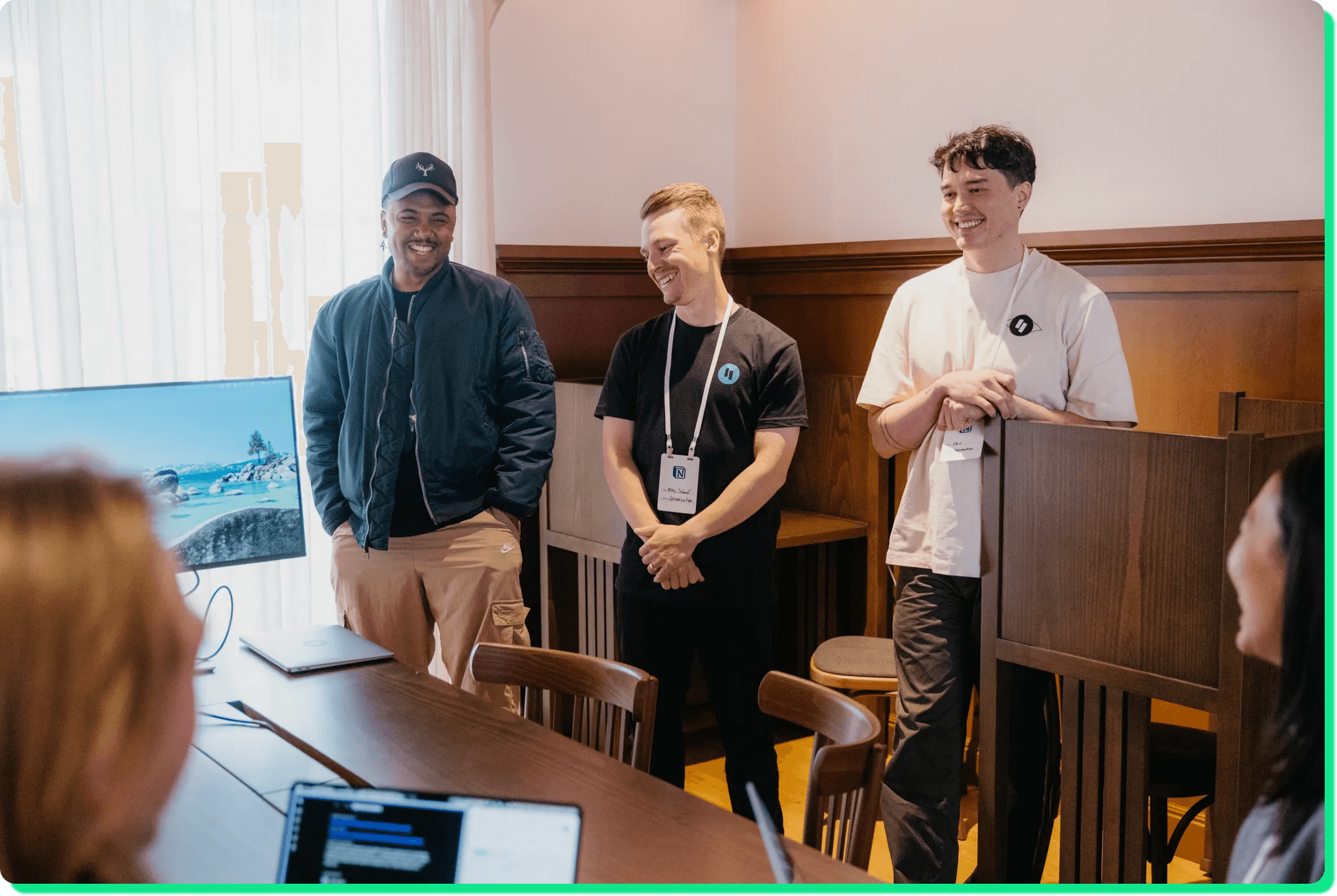
📸: Photo by Boris Zharkov.
And that instinct is the same one that shows up in our client work. When Notion ships something, we're not reading about it months later, we're building on it from the time it drops. For most teams, that's the hard part. Notion keeps moving, new features, new primitives, new capabilities, and keeping a workspace current ends up being a full time job nobody actually signed up for. We did sign up for it. The same energy that got four of us through a 48-hour build is what we bring to our client workspaces every week: spot what's new, work out what's worth using, and put it to work before it's old news.
So if you want a team that stays this close to what Notion can do, let's talk.