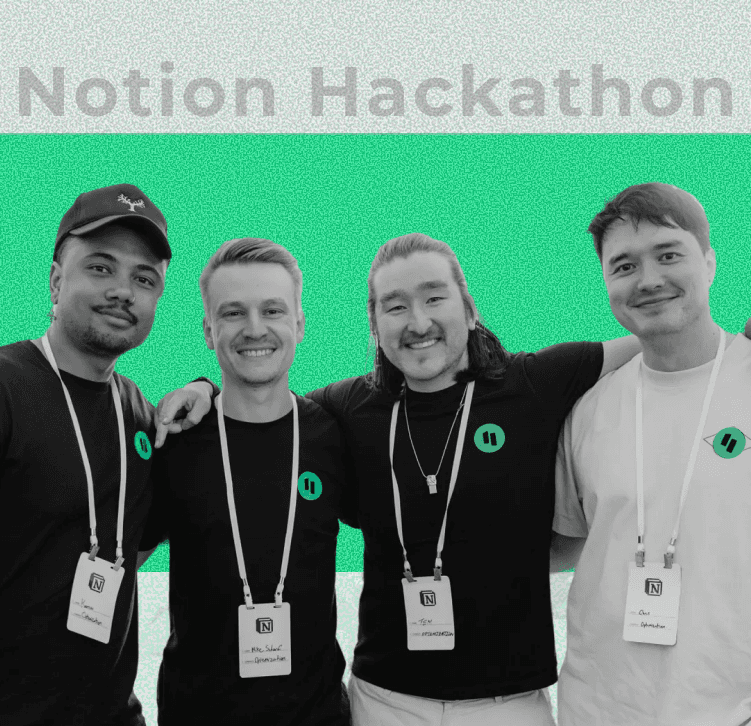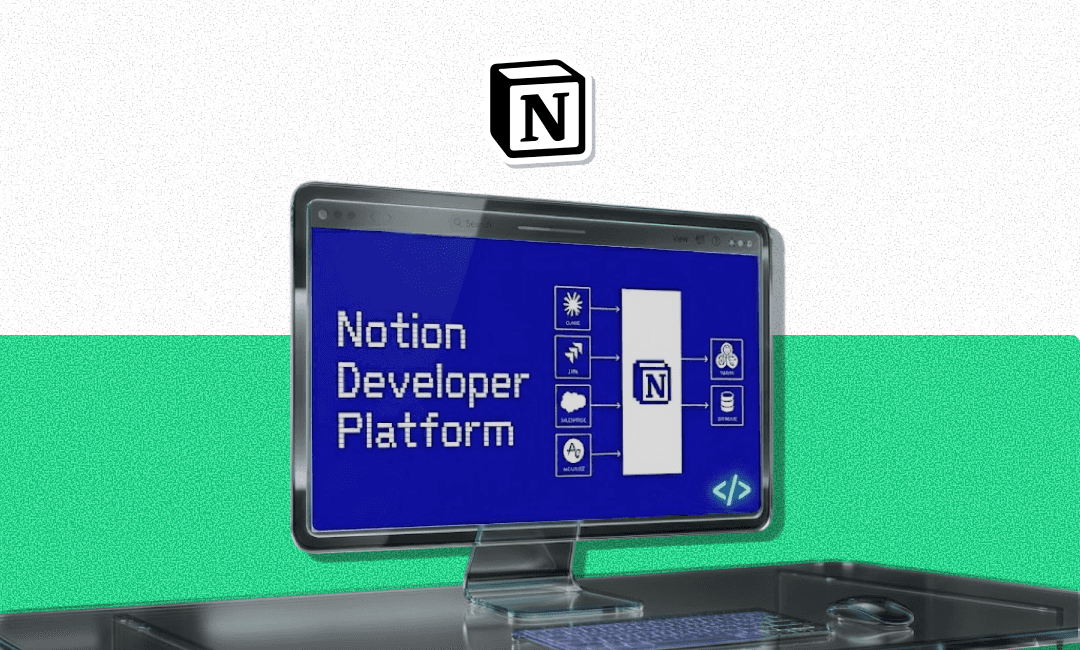
On May 13, Notion held a virtual event called Make with Notion: Developer Platform, and the wall of new terminology was a lot to take in. Workers. Agent SDK. External Agents API. ntn CLI. MCP improvements. Even some of us who use Notion every day found ourselves asking: wait, what does that one mean?
If building with Notion under the hood isn't your thing, this announcement will probably be a snoozefest. We love nerd-ing about this kind of stuff, so we've broken it down for you.
(If you want a refresher on the last big batch of Notion updates, we wrote about those too.)
Behind all the new terminology, there are three things changing for teams who use Notion. Each of them turns Notion into less of a place you go to take notes and more of a place where your team, your tools, and your AI agents all do the work side by side.
Here's what's new, and what each piece actually unlocks for your team.
Bringing any data into Notion, automatically (a.k.a. Notion Workers)
The headliner of the Notion Developer Platform announcement is something called Notion Workers.
Workers are small bits of custom code that run on Notion's servers. You write the code (or these days, an AI coding agent can write it for you), and Notion handles the rest. Unlike a Custom Agent, which uses AI to figure out what to do, a Worker just runs the code: same steps, same outcome, every time.
What this changes: you no longer need a separate tool (Zapier, Make, n8n, that custom script your engineer wrote in 2022) sitting between Notion and the rest of your stack.
Workers can trigger in a few different ways. The one most teams will feel first is sync: pulling data from another tool (your CRM, your support system, your billing platform, your project tracker) into a Notion database on a schedule you set. No more exporting CSVs every Monday. No more half-broken automations that nobody remembers setting up.
In practice, that looks like:
Your sales team's pipeline data refreshing into a Notion sales board every morning, so the team plans against current numbers and not last week's snapshot
Customer support tickets flowing from your help desk into an ops dashboard hourly, so leadership sees what the team is actually dealing with
Subscription events from your billing tool dropping into a finance tracker the moment they happen
Workers are free during the beta period, but only on Business and Enterprise plans (sorry, Plus and Free, this one's gated 😬). Starting August 11, 2026, every Worker run will draw a small amount of Notion credits. Cheap enough that most use cases land between pennies and a few dollars a month. (Notion published the math if you want to size it for your team.)
Inviting outside AI agents to work inside Notion
Most teams using AI today have a Tower-of-Babel problem: one AI helper in your IDE, another in your sales tool, a third in your support inbox, a fourth somewhere in Slack. Each one does its thing and posts the result into… a chat thread that scrolls past in two hours.
The new External Agents API flips that. It lets AI agents from outside Notion show up inside Notion as workspace teammates. You can mention them on a page, assign them tasks in a database, watch them think and act, all with the rest of the team able to see what's happening. It's not Notion's own AI doing the work. It's the AI agent you already use, just showing up in the place your team is already looking.
The result is that AI output stops landing in a tool nobody checks and starts landing where the work actually happens, next to the docs, the projects, and the people who need to act on it.
This piece is still in alpha. Worth a pilot, not worth building your quarter around yet. But the direction it points in is clear. If your team is already using Notion's Custom Agents, the picture just got bigger.
Kicking off Notion from the rest of your stack (the Agent SDK)
Until now, Notion Custom Agents mostly ran inside Notion. Either you’d run them manually, or you’d rely on Notion-based triggers. The new Agent SDK changes that: you can invoke a Notion agent from anywhere else your team works, like a button in your CRM or a workflow in another app.
A slash command in Slack can kick off a Notion agent that drafts a project page and posts the link back into the channel. A new row in your CRM can trigger a Notion agent to spin up an onboarding doc for that customer. A calendar event before a big meeting can trigger an agent that gathers the prep notes automatically.
The point isn't that any one of those examples is magic on its own. The point is that you stop having to remember to go into Notion to start something. Notion comes to where the work is starting.
This is the surface that quietly does the most to make Notion feel like infrastructure rather than a destination.
A few other things, if you're curious
The announcement also included some pieces aimed more at developers than at most teams: a new command-line tool called ntn for people who like working from a terminal, broader API access (any workspace member can connect Notion to outside tools now, not just owners), and expanded support for MCP connections (the standard that lets AI assistants like Claude securely connect to external tools and bring that context into Notion).
If those mean nothing to you, skip past. You're not missing a team-level shift. If you want the full visual overview, Notion's developer platform page has the rundown.
Who the Notion Developer Platform is actually for
Honestly, the teams that'll get the most out of this are the ones with the most chaos in their stack. If your team works across half a dozen tools (a CRM, a help desk, a project tracker, a billing platform) and someone, somewhere is exporting CSVs every Monday to keep Notion current, the Developer Platform is built for you. Same goes for any team running a complex, multi-step workflow that today requires a Zapier scenario, a third-party automation, and a prayer.
That said, this isn't only for teams ready to wire up code on day one. The partner-agent angle means even smaller teams can benefit: if your team uses a major AI helper already, there's a real chance it'll just show up natively in your Notion workspace soon, without you doing anything special.
Regardless of which camp you're in, mark your calendars because on August 11, 2026, Workers stop being free and start running on Notion credits. If you start prototyping anything Worker-backed between now and then, model what it'll cost after that date, not what it costs today. The August invoice doesn't need to be the surprise.
So, what's actually changing?
Strip the new terms back and there's one bet underneath all of it: Notion is no longer asking to be the place where you take notes. It's asking to be the place where your team, your tools, and your AI agents all do the work together.
It's exciting to see all the possibilities this release opens up.
Trying to figure out where the Developer Platform actually fits your team's setup, or whether to wait until August? That's a conversation we're having a lot lately. Let's talk.